
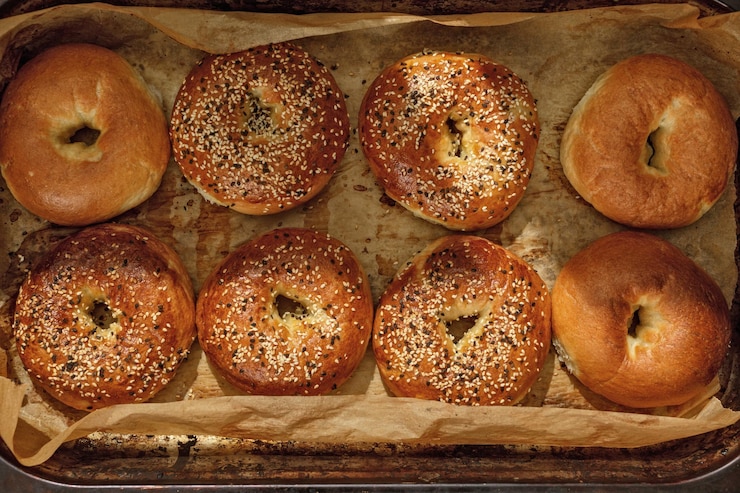
Making homemade bagels may sound like a project best left to experienced bakers, but the process is surprisingly straightforward once you understand the basic steps. A good homemade bagel should have a chewy centre, a slightly crisp exterior and enough structure to hold generous amounts of cream cheese, butter or your favourite fillings. The secret lies in preparing a firm yeast dough, shaping it properly and briefly boiling the bagels before baking. That boiling step gives bagels their distinctive chewy crust and separates them from ordinary bread rolls. You can also customise homemade bagels with seeds, herbs, cheese, cinnamon or other toppings to suit your taste. With a few basic ingredients and some patience during the rising stages, you can produce fresh bagels without specialised equipment. This easy homemade bagel recipe is ideal for beginners who want to learn bread baking while creating a breakfast staple from scratch.
Why Homemade Bagels Are Worth Making
Freshly baked bagels have a texture that is difficult to replicate with packaged versions. The outside develops a lightly crisp crust while the inside remains dense, chewy and satisfying.
Making them yourself also gives you control over the ingredients. You can adjust the salt, add wholegrain flour, choose your favourite toppings or create smaller bagels for snacks.
The recipe is based on a simple yeast dough, so it also gives beginner bakers an opportunity to practise kneading, proofing, shaping and boiling dough.
Ingredients for Homemade Bagels
For the Dough
- 500 g strong white bread flour
- 10 g instant dry yeast
- 15 g sugar
- 10 g salt
- 300 ml lukewarm water
- 15 ml vegetable oil
For the Water Bath
- 2 litres water
- 30 g honey or brown sugar
- 10 g bicarbonate of soda
For the Topping
- 1 egg, beaten
- 30 g sesame seeds
- 30 g poppy seeds
- 20 g sunflower seeds
- 10 g coarse salt, optional
How to Make the Bagel Dough
Add the bread flour, yeast, sugar and salt to a large mixing bowl. Keep the salt and yeast separated initially by placing them on opposite sides of the bowl.
Pour in the lukewarm water and vegetable oil.
Mix with a wooden spoon or your hands until a rough dough forms.
Transfer the dough to a lightly floured work surface.
Knead for approximately 8 to 10 minutes until the dough becomes smooth and elastic.
You can also use a stand mixer fitted with a dough hook and knead on low to medium speed for approximately 6 to 8 minutes.
The dough should feel firm rather than very soft or sticky. Bagel dough contains less water than many standard bread doughs, which helps create the characteristic chewy texture.
Let the Dough Rise
Place the kneaded dough in a lightly oiled bowl.
Cover with a clean kitchen towel or reusable food cover.
Leave it in a warm, draught-free place for approximately 60 to 90 minutes, or until it has increased noticeably in size.
The dough does not necessarily need to double completely. Look for a clear increase in volume and a lighter, more elastic texture.
If your kitchen is cold during winter, place the covered bowl somewhere gently warm, but avoid excessive heat because it can negatively affect the yeast.
How to Shape Homemade Bagels
Once the dough has risen, gently press it down to remove excess air.
Divide the dough into 8 equal pieces.
Shape each piece into a smooth ball by pulling the edges underneath and pinching them together.
There are two easy ways to create the bagel shape.
The first method involves poking your thumb through the centre of each dough ball and gently stretching the opening until it is approximately 4 to 5 cm wide.
The second method involves rolling each portion into a rope, wrapping it around your hand and joining the ends together firmly.
Place the shaped bagels on a lightly floured baking tray.
Cover them loosely and allow them to rest for approximately 20 to 30 minutes.
Why Bagels Need to Be Boiled
Boiling is one of the most important steps in homemade bagel making. It sets the outer layer of the dough before the bagels enter the oven, creating the chewy crust associated with traditional bagels.
Bring the water to a gentle boil in a large saucepan.
Add the honey or brown sugar and bicarbonate of soda.
Carefully lower 2 or 3 bagels into the water at a time, depending on the size of your saucepan.
Boil each bagel for approximately 45 to 60 seconds per side.
Use a slotted spoon to remove them and allow excess water to drain.
Place the boiled bagels on a lined baking tray.
Do not overcrowd the saucepan because the bagels need enough space to move freely.
Add the Toppings
Preheat the oven to 220°C.
Brush each boiled bagel lightly with beaten egg.
Sprinkle with sesame seeds, poppy seeds, sunflower seeds or your preferred toppings.
For a savoury finish, you can add a small amount of coarse salt. Avoid adding too much because the dough already contains salt.
You can also leave some bagels plain if you want to use them for both sweet and savoury fillings.
Bake the Bagels
Place the tray in the preheated oven.
Bake for approximately 18 to 22 minutes until the bagels are puffed and deeply golden brown.
Rotate the tray halfway through baking if your oven browns unevenly.
Remove the bagels from the oven and transfer them to a wire rack.
Allow them to cool for at least 15 minutes before slicing.
The interior will continue to set as the bagels cool, so cutting them immediately can make the crumb appear slightly gummy.
How to Get Chewy Homemade Bagels
Use strong bread flour with a relatively high protein content. The additional gluten-forming ability helps create the firm, chewy structure associated with bagels.
Knead the dough thoroughly. Proper kneading develops the gluten network that gives the dough strength and elasticity.
Do not add excessive water. A very soft dough can produce a bread-like texture rather than the dense chew you want from a bagel.
The boiling stage also matters. A brief boil creates the characteristic exterior before baking finishes the cooking process.
Finally, avoid overproofing the shaped bagels. If they become excessively puffy before boiling, they may lose some of their structure.
Homemade Bagel Variations
Everything-Style Bagels
Combine sesame seeds, poppy seeds, dried onion, dried garlic and a small amount of coarse salt. Sprinkle the mixture over the egg-washed bagels before baking.
Cheddar and Herb Bagels
Add 80 g grated Cheddar cheese and 10 g chopped fresh parsley to the dough. Knead gently until evenly distributed before the first rise.
Cinnamon Raisin Bagels
Add 75 g raisins, 40 g brown sugar and 5 g ground cinnamon to the dough. These bagels are excellent served toasted with cream cheese.
Wholegrain Bagels
Replace 150 g of the white bread flour with wholewheat bread flour. You may need to add an additional 15 to 30 ml water if the dough feels excessively dry.
Garlic and Herb Bagels
Add 5 g garlic powder and 10 g dried mixed herbs to the dough. Finish the baked bagels with a little melted butter and chopped fresh parsley.
What to Serve with Homemade Bagels
Fresh bagels can form the foundation of countless breakfasts and lunches. Cream cheese is a classic topping, especially when paired with smoked salmon, cucumber or fresh herbs.
For a simple breakfast, toast a sliced bagel and spread it with butter, peanut butter or avocado.
Eggs also work beautifully. Fill a toasted bagel with scrambled eggs, cheese and sautéed mushrooms for a filling morning meal.
For lunch, add grilled chicken, lettuce, tomato and a creamy dressing. Tuna, roasted vegetables and hummus are also excellent filling choices.
If you prefer something sweet, serve toasted bagels with cream cheese and honey, peanut butter and banana or homemade fruit preserves.
How to Store Homemade Bagels
Fresh bagels are best eaten within a day or two because their texture changes as they lose moisture.
Store cooled bagels in an airtight bag or container at room temperature for up to two days.
For longer storage, slice the bagels before freezing them. Place them in a freezer-safe bag and freeze for up to three months.
You can toast frozen bagel halves directly without completely thawing them first. This makes homemade bagels particularly convenient for busy mornings.
Avoid refrigerating bagels unless necessary because the cold environment can cause the bread to stale more quickly.
Common Homemade Bagel Mistakes
One common mistake is using water that is too hot when making the dough. Extremely hot water can damage the yeast, while lukewarm water provides a better environment for fermentation.
Another mistake is making the dough too wet. Bagel dough should feel firm and manageable rather than loose and sticky.
Skipping the boiling stage will also change the final texture. Without boiling, the dough is likely to resemble a bread roll rather than a traditional bagel.
Do not rush the cooling stage either. Freshly baked bagels need a little time to settle before slicing.
Finally, avoid adding too many toppings before baking. Excessive toppings can fall off during handling or burn in the oven.
Homemade bagels are much easier to make than they first appear, especially once you understand how each stage contributes to the final texture. A firm yeast dough, thorough kneading, controlled proofing and a short boil create the chewy structure that makes a bagel different from ordinary bread. The basic recipe is also versatile enough to accommodate sweet and savoury flavours, from cinnamon and raisins to sesame, herbs and cheese. Freshly baked bagels make excellent breakfasts, packed lunches and snacks because they pair well with almost any filling. Freezing sliced bagels also gives you a practical homemade option that can be toasted whenever you need a quick meal. With a little practice, you will become more confident with the dough and can experiment with different shapes, toppings and flavours. Once you taste a warm homemade bagel with your favourite filling, you may find that baking your own becomes a regular part of your breakfast routine.