
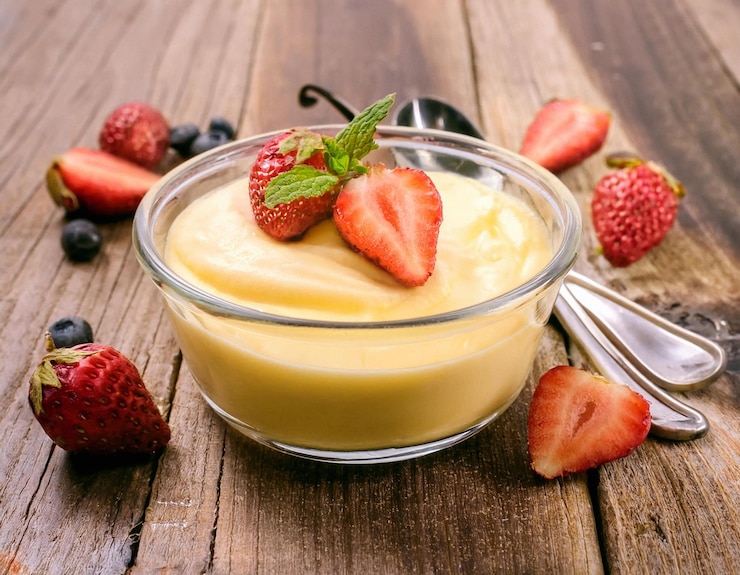
Homemade custard is one of those simple desserts that can turn an ordinary meal into something special. When made properly, it should be smooth, glossy and rich, with a delicate texture that coats the back of a spoon without becoming heavy or grainy. The biggest challenge is keeping the eggs from scrambling as they come into contact with hot milk. Fortunately, a few simple techniques make it much easier to control the temperature and create consistently silky custard at home. The secret is not complicated equipment or advanced cooking skills but patience, gentle heat and careful mixing. Once you understand how eggs react to heat, you can confidently make homemade custard for puddings, tarts, fruit desserts or simply enjoy it warm by the spoonful. This guide explains exactly how to make silky smooth custard without scrambling the eggs, along with practical tips for avoiding common mistakes.
What Makes Custard Silky and Smooth?
Custard gets its characteristic texture from eggs thickening a mixture of milk, cream and sugar. The proteins in the egg yolks gradually set as they are heated, creating a creamy consistency.
The challenge is that eggs can go from gently thickened to scrambled surprisingly quickly when exposed to excessive heat. If the temperature becomes too high or the mixture is left unattended, the proteins tighten too much and form small curds.
A successful custard therefore depends on controlling the heat rather than trying to cook it quickly. Gentle cooking allows the egg yolks to thicken the mixture gradually while constant stirring distributes the heat evenly.
The Best Ingredients for Homemade Custard
The ingredients you choose can have a noticeable effect on the final texture.
Full-Cream Milk
Full-cream milk gives custard a rich, creamy base. It contains enough fat to produce a smooth texture without making the custard excessively heavy.
Egg Yolks
Egg yolks are responsible for much of the custard’s richness and thickening power. Using yolks rather than whole eggs produces a particularly smooth and luxurious result.
Cream
Whipping cream adds extra richness and creates a softer, silkier texture. You can use a combination of milk and cream rather than relying entirely on cream.
Sugar
Sugar sweetens the custard and also contributes to its smooth texture. Granulated white sugar works well because it dissolves easily in warm dairy.
Vanilla
Vanilla extract or vanilla bean gives the custard a gentle aromatic flavour. Add vanilla extract toward the end of cooking so its flavour remains fresh.
Cornflour
A small amount of cornflour can make homemade custard more forgiving because it provides additional thickening power. This is particularly useful if you are new to making custard or want a stable sauce that reheats well.
The Full Recipe for Silky Homemade Custard
This recipe produces a rich, smooth custard that is suitable for serving warm with desserts or chilling for later use.
Ingredients
- 500 ml full-cream milk
- 250 ml whipping cream
- 5 large egg yolks
- 80 g white sugar
- 20 g cornflour
- 10 ml vanilla extract
- 1 ml salt
Method
Pour the milk and cream into a medium saucepan.
Heat the mixture over medium-low heat until it is hot and steaming but not boiling. Small bubbles may begin to appear around the edge, but the dairy should not be allowed to boil vigorously.
While the milk is heating, place the egg yolks, sugar, cornflour and salt in a separate heatproof bowl.
Whisk until the mixture is smooth and slightly lighter in colour.
Slowly pour approximately 100 ml of the hot milk mixture into the egg mixture while whisking continuously.
Add another small amount of hot milk and continue whisking.
This gradual process is called tempering. It gently raises the temperature of the egg yolks instead of exposing them suddenly to very hot liquid.
Once the egg mixture is warm and well combined, slowly pour it back into the saucepan while whisking continuously.
Reduce the heat to low.
Stir constantly with a silicone spatula or wooden spoon, making sure to scrape across the bottom and into the corners of the saucepan.
Continue cooking gently until the custard thickens enough to coat the back of the spoon.
Do not allow the custard to boil.
Remove the saucepan from the heat and stir in the vanilla extract.
For an exceptionally smooth finish, pour the custard through a fine-mesh sieve into a clean bowl.
Serve immediately or cover the surface with baking paper or plastic wrap pressed directly against the custard to prevent a skin from forming.
Why Tempering the Eggs Matters
Tempering is the most important technique for preventing scrambled eggs in custard. Instead of pouring hot milk directly into cold egg yolks, you gradually introduce the hot liquid while whisking.
This allows the temperature of the eggs to rise slowly. Once the egg mixture has warmed up, it can be incorporated into the remaining hot milk with a much lower risk of forming curds.
The process is simple, but the order matters. Always add the hot dairy gradually to the eggs rather than adding the cold egg mixture directly to a saucepan of very hot milk.
How Hot Should Custard Be?
You do not need to boil custard to make it thick. In fact, boiling is one of the easiest ways to ruin an egg-based custard.
The mixture should be heated gently until the egg proteins thicken the liquid. If you use a kitchen thermometer, aim for roughly 80 to 85°C and avoid allowing the custard to reach a rolling boil.
Without a thermometer, watch the texture instead. The custard should coat the back of a spoon, and when you draw a finger through the coating, the line should remain visible.
Stirring Is Essential
Constant stirring is another important part of making smooth custard. The bottom of the saucepan is closest to the heat source, so the custard can overcook there if it is left sitting still.
Use a silicone spatula or wooden spoon and continuously move it across the base and around the sides of the pan.
A whisk can also be used, particularly during the early stages of cooking. Once the custard starts thickening, a spatula makes it easier to scrape the bottom of the saucepan.
Why Low Heat Works Better
It can be tempting to increase the heat when the custard seems to be taking too long to thicken. This usually creates more problems than it solves.
High heat causes the egg proteins to set rapidly. Instead of forming a smooth network throughout the liquid, they can tighten into small curds.
Low to medium-low heat gives you much more control. The custard may take a few extra minutes, but those minutes are worthwhile when the result is smooth and creamy.
Signs That Your Custard Is Ready
There are several ways to tell when custard has reached the right consistency.
The first is the spoon test. Dip a clean spoon into the custard and lift it out. The custard should cling to the spoon rather than immediately running off.
Run your finger across the back of the spoon. If the custard holds the line without flowing back together immediately, it is ready.
Remember that custard continues to thicken slightly as it cools. It does not need to be extremely thick while still in the saucepan.
How to Fix Custard That Is Slightly Lumpy
If your custard develops a few small lumps, do not immediately throw it away. Removing it from the heat and passing it through a fine-mesh sieve can often restore a much smoother texture.
Pour the custard through the sieve while it is still warm. Use a spatula to gently press the mixture through without forcing large curds through the mesh.
If the custard is only slightly lumpy, this technique can make a significant difference.
However, if the entire mixture has become heavily scrambled, it may not be possible to restore the original silky texture. Prevention is much easier than trying to repair badly overcooked custard.
Common Custard Mistakes to Avoid
Boiling the Milk
Heating the milk until it boils aggressively makes tempering more difficult and increases the risk of scrambling the eggs. Heat the dairy until steaming and hot instead.
Adding All the Hot Milk at Once
Pouring hot milk directly into cold egg yolks can shock the eggs and create curds. Add the milk slowly while whisking continuously.
Walking Away from the Stove
Custard can change from smooth to overcooked quickly. Stay nearby and stir continuously once the egg mixture has been added.
Using Excessive Heat
High heat does not necessarily make custard better or faster. Gentle cooking gives you much greater control over the texture.
Overcooking the Custard
Remember that custard continues to thicken after it is removed from the heat. Take it off the stove as soon as it reaches the right consistency.
Skipping the Sieve
A fine-mesh sieve is not essential, but it is an excellent final step. It catches tiny pieces of cooked egg and creates a beautifully smooth finish.
How to Make Custard Even Richer
For an extra-luxurious custard, increase the amount of cream while reducing the milk slightly. You can also add an extra egg yolk for a deeper colour and richer flavour.
A vanilla bean can replace vanilla extract if you want a more pronounced vanilla flavour. Split the bean lengthways and warm it with the milk and cream, then remove it before combining the dairy with the eggs.
A small pinch of salt is also useful. It does not make the custard taste salty but helps balance the sweetness and highlight the vanilla and dairy flavours.
Flavour Variations for Homemade Custard
Classic vanilla custard is incredibly versatile, but you can easily change the flavour to suit different desserts.
For cinnamon custard, add a cinnamon stick to the milk while heating and remove it before tempering the eggs. This works beautifully with baked apples, malva pudding and milk tart-inspired desserts.
For chocolate custard, add finely chopped dark chocolate after removing the thickened custard from the heat and stir until completely melted.
For citrus custard, add finely grated lemon or orange zest to the milk while heating. Strain the mixture before serving for a smooth finish.
For coffee custard, dissolve a small amount of instant espresso powder into the warm dairy.
How to Serve Homemade Custard
Warm custard is a classic accompaniment to many South African desserts. Pour it generously over malva pudding, baked puddings, apple crumble or steamed desserts.
It also works beautifully with fruit. Serve warm custard over roasted peaches, poached pears, baked apples or fresh berries.
For a simple dessert, layer chilled custard with sliced bananas, biscuits and whipped cream. You can also use thick custard as a filling for trifles, tarts and layered desserts.
How to Store Homemade Custard
Allow the custard to cool slightly before transferring it to an airtight container.
Press baking paper or plastic wrap directly onto the surface to prevent a skin from forming.
Refrigerate the custard and use it within approximately three days. When reheating, use low heat and stir frequently.
If the chilled custard becomes too thick, whisk in a small amount of milk until it reaches your preferred consistency.
Avoid reheating it over high heat because excessive heat can cause the eggs to overcook and make the custard grainy.
Using Custard in South African Desserts
Homemade custard is a natural partner for many beloved South African puddings. A generous pour over malva pudding creates a combination of warm sponge, sweet sauce and creamy vanilla custard.
It is equally delicious with milk tart, baked pudding, koeksisters or a simple baked fruit dessert.
You can also use it as part of a trifle by layering custard with sponge cake, fruit, jelly and whipped cream. For a richer dessert, alternate layers of custard with caramelised bananas and crushed biscuits.
Because homemade custard has such a neutral vanilla base, it can be adapted to complement almost any dessert on the table.
Tips for Perfect Custard Every Time
Use fresh eggs because their yolks provide excellent colour and richness. Keep the heat gentle once the eggs are introduced and never allow the custard to boil. Temper the eggs slowly by adding hot dairy in small amounts while whisking continuously. Stir the custard constantly so that heat is distributed evenly across the bottom of the saucepan. Remove the custard from the heat as soon as it coats the back of a spoon because it will continue thickening as it cools. Strain the finished custard through a fine-mesh sieve for an exceptionally smooth texture. If you are nervous about scrambling the eggs, use a thermometer and focus on controlling the temperature rather than rushing the cooking process.
Making silky smooth homemade custard without scrambling the eggs is mainly about controlling heat and giving the ingredients time to come together gradually. Tempering the egg yolks with warm dairy prevents them from cooking too quickly while gentle heat allows them to thicken the custard evenly. Constant stirring also keeps the mixture moving and prevents the bottom of the saucepan from becoming too hot. A fine-mesh sieve provides an easy final step that removes tiny imperfections and leaves the finished custard beautifully smooth. Once you master these techniques, homemade custard becomes a reliable recipe rather than something that feels difficult or intimidating. The finished custard can be served warm with traditional puddings, chilled in layered desserts or flavoured with spices, chocolate, citrus or coffee. With a little patience and careful temperature control, you can make rich, glossy custard at home that is smooth enough to rival any bakery or restaurant version.