
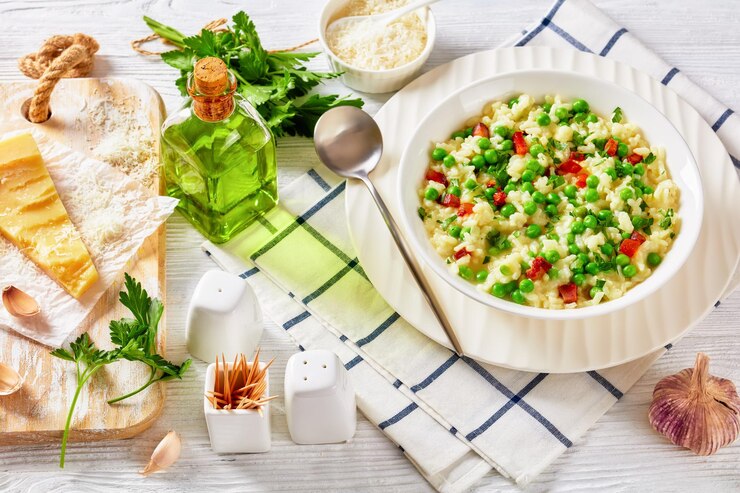
Spring is the perfect time to bring fresh peas into the kitchen, and risotto provides an ideal creamy base for showing off their naturally sweet flavour. Tender peas add beautiful colour, a gentle crunch and a fresh taste that can brighten the richness of a traditional risotto. Whether you are cooking a simple pea and Parmesan risotto or adding asparagus, lemon, mint or crispy bacon, there are countless ways to make this classic Italian dish feel distinctly seasonal. The secret to a good risotto is patience, but the cooking process is surprisingly straightforward once you understand how the rice absorbs the stock. Fresh peas should be added at the right stage so they retain their vibrant colour and delicate texture rather than becoming dull and overcooked. These spring risotto recipes are designed for relaxed family dinners, weekend lunches and occasions when you want a comforting meal that still tastes light and fresh. With creamy rice, sweet peas and a selection of seasonal ingredients, these recipes make the most of spring produce while creating satisfying meals from simple ingredients.
Why Fresh Peas Work So Well in Risotto
Fresh peas bring a natural sweetness to risotto that balances the savoury flavours of stock, Parmesan cheese and aromatics. Their bright green colour also makes an otherwise creamy dish look vibrant and inviting.
Frozen peas can certainly be used when fresh peas are unavailable, but fresh peas have a particularly pleasant texture when cooked briefly. They should not be boiled for too long because overcooking can make them soft and reduce their fresh flavour.
Risotto rice also provides the perfect foundation for peas. Varieties such as Arborio contain enough starch to create the characteristic creamy texture while remaining pleasantly firm in the centre when properly cooked.
How to Make Perfect Pea Risotto
Before trying the recipes, it helps to understand a few basic risotto techniques.
Use a wide, heavy-based saucepan or frying pan so the rice cooks evenly. Keep the stock warm in a separate saucepan because adding cold liquid can interrupt the cooking process.
The stock should be added gradually rather than all at once. Add one ladleful and stir regularly until most of the liquid has been absorbed before adding the next.
You do not need to stir constantly, but frequent stirring helps release the starch from the rice and prevents it from sticking to the pan.
The finished risotto should be creamy and loose enough to spread gently across a plate. The rice should remain slightly firm in the centre rather than becoming completely soft.
Classic Fresh Pea and Parmesan Risotto
This simple pea risotto allows the sweetness of fresh peas to take centre stage. Parmesan, onion and vegetable stock provide a savoury foundation without overwhelming the delicate flavour of the peas.
Ingredients
- 300 g fresh peas, shelled
- 300 g Arborio rice
- 1 litre vegetable stock
- 1 small onion, finely chopped
- 2 cloves garlic, finely chopped
- 30 ml olive oil
- 30 g butter
- 100 ml dry white wine, optional
- 80 g finely grated Parmesan cheese
- 30 g fresh parsley, chopped
- Salt and black pepper
- 15 ml lemon juice
Method
Heat the vegetable stock in a saucepan and keep it gently simmering.
Heat the olive oil and half of the butter in a large, heavy-based pan.
Add the onion and cook gently for five minutes until softened.
Add the garlic and cook for another minute.
Stir in the Arborio rice and cook for two minutes, stirring continuously, until the grains are lightly coated and glossy.
Pour in the white wine if using and cook until almost completely absorbed.
Add one ladleful of warm stock.
Stir regularly until most of the liquid has been absorbed.
Continue adding the stock one ladleful at a time, stirring between additions.
After approximately 15 minutes, add the fresh peas.
Continue cooking and adding stock until the rice is creamy and tender but still slightly firm in the centre.
Remove from the heat.
Stir in the remaining butter, Parmesan and lemon juice.
Season with salt and black pepper.
Cover and leave to rest for two minutes.
Stir through the fresh parsley and serve immediately.
Lemon, Pea and Mint Risotto
Lemon and mint give this risotto an especially fresh spring character. The citrus cuts through the creamy rice while mint complements the sweetness of the peas.
Ingredients
- 300 g Arborio rice
- 250 g fresh peas
- 1 litre vegetable stock
- 1 onion, finely chopped
- 2 cloves garlic, minced
- 30 ml olive oil
- 30 g butter
- 100 ml dry white wine, optional
- 70 g Parmesan cheese, grated
- Zest of 1 lemon
- 20 ml lemon juice
- 20 g fresh mint, finely chopped
- Salt and black pepper
Method
Keep the vegetable stock warm in a saucepan over low heat.
Heat the olive oil and half the butter in a large pan.
Add the onion and cook gently until soft.
Add the garlic and cook for one minute.
Stir in the rice and cook for two minutes.
Add the wine and allow it to reduce.
Begin adding the warm stock one ladleful at a time.
Stir frequently and wait until most of the liquid has been absorbed before adding more.
After approximately 15 minutes, stir in the peas.
Continue cooking until the rice is creamy and the peas are tender but still bright.
Remove the pan from the heat.
Stir in the remaining butter, Parmesan, lemon zest and lemon juice.
Season with salt and pepper.
Fold through the chopped mint just before serving.
Spring Pea and Asparagus Risotto
Fresh asparagus and peas are a natural spring pairing. The asparagus contributes a delicate earthy flavour while the peas bring sweetness and colour.
Ingredients
- 300 g Arborio rice
- 200 g fresh peas
- 250 g asparagus
- 1 litre vegetable stock
- 1 onion, finely chopped
- 2 cloves garlic, minced
- 30 ml olive oil
- 40 g butter
- 100 ml dry white wine
- 80 g Parmesan cheese, grated
- 20 g fresh parsley
- Salt and black pepper
- 15 ml lemon juice
Method
Warm the vegetable stock in a saucepan.
Trim the woody ends from the asparagus and cut the stalks into small pieces, keeping the tips separate.
Heat the olive oil and half the butter in a large pan.
Cook the onion for five minutes until softened.
Add the garlic and cook for one minute.
Add the rice and stir for two minutes.
Pour in the white wine and cook until reduced.
Add the stock gradually, stirring frequently.
After approximately 12 minutes, add the chopped asparagus stalks.
Add the asparagus tips and peas after another two to three minutes.
Continue cooking until the rice is creamy and the vegetables are tender but retain some texture.
Remove from the heat.
Stir through the remaining butter, Parmesan and lemon juice.
Season with salt and pepper.
Garnish with parsley and serve immediately.
Creamy Pea and Mushroom Risotto
Mushrooms add a deep savoury flavour to sweet peas, making this risotto particularly satisfying. It is a good vegetarian main course for a family dinner.
Ingredients
- 300 g Arborio rice
- 250 g fresh peas
- 250 g mushrooms, sliced
- 1 litre vegetable stock
- 1 onion, finely chopped
- 2 cloves garlic, minced
- 30 ml olive oil
- 40 g butter
- 100 ml dry white wine, optional
- 70 g Parmesan cheese, grated
- 5 g fresh thyme leaves
- Salt and black pepper
Method
Keep the stock warm over low heat.
Heat half the olive oil in a large pan.
Add the mushrooms and cook over medium-high heat until golden.
Remove the mushrooms and set aside.
Add the remaining oil and half the butter to the pan.
Cook the onion until softened.
Add the garlic and thyme.
Stir in the Arborio rice and cook for two minutes.
Add the wine and allow it to reduce.
Gradually add the warm stock, stirring regularly.
After approximately 15 minutes, add the peas and cooked mushrooms.
Continue cooking until the rice is tender but slightly firm and the risotto has a creamy consistency.
Remove from the heat.
Stir in the remaining butter and Parmesan.
Season with salt and black pepper.
Rest for two minutes before serving.
Spring Pea and Crispy Bacon Risotto
For a richer version, crispy bacon adds smoky, salty flavour that contrasts beautifully with sweet peas. This recipe works particularly well for a weekend lunch or comforting evening meal.
Ingredients
- 300 g Arborio rice
- 250 g fresh peas
- 150 g bacon, diced
- 1 litre chicken stock
- 1 onion, finely chopped
- 2 cloves garlic, minced
- 20 ml olive oil
- 30 g butter
- 100 ml dry white wine, optional
- 70 g Parmesan cheese, grated
- 15 g fresh parsley
- Black pepper
Method
Warm the chicken stock in a saucepan.
Heat a large frying pan over medium heat and cook the bacon until crisp.
Remove the bacon and place it on a plate lined with kitchen paper.
Add the olive oil and half the butter to the pan.
Cook the onion until softened.
Add the garlic and cook for one minute.
Stir in the rice and cook for two minutes.
Add the white wine and cook until reduced.
Gradually add the warm stock while stirring regularly.
After approximately 15 minutes, add the peas.
Continue cooking until the rice reaches the desired consistency.
Remove from the heat.
Stir through the remaining butter and Parmesan.
Add most of the crispy bacon and chopped parsley.
Season with black pepper.
Serve topped with the remaining bacon.
Pea, Spinach and Goat’s Cheese Risotto
Baby spinach and goat’s cheese create a creamy, tangy combination that works beautifully with sweet spring peas. This recipe is also a good way to increase the amount of green vegetables in your meal.
Ingredients
- 300 g Arborio rice
- 200 g fresh peas
- 100 g baby spinach
- 100 g soft goat’s cheese
- 1 litre vegetable stock
- 1 onion, finely chopped
- 2 cloves garlic, minced
- 30 ml olive oil
- 30 g butter
- 100 ml dry white wine, optional
- 15 ml lemon juice
- Salt and black pepper
Method
Keep the vegetable stock warm.
Heat the olive oil and butter in a large pan.
Cook the onion until soft.
Add the garlic and cook briefly.
Add the rice and stir for two minutes.
Pour in the wine if using and allow it to reduce.
Add the stock gradually, stirring frequently.
After approximately 15 minutes, stir in the peas.
Add the spinach during the final few minutes of cooking.
Continue cooking until the rice is creamy and the vegetables are tender.
Remove from the heat.
Stir in the goat’s cheese and lemon juice.
Season with salt and black pepper.
Allow the risotto to rest for two minutes before serving.
Tips for Cooking with Fresh Peas
Fresh peas do not need a long cooking time. Add them towards the end of the risotto process so they remain bright, sweet and slightly firm.
If you are using peas straight from their pods, shell them just before cooking for the freshest flavour. Give them a quick rinse before adding them to the dish.
Taste a pea before cooking if possible. Very young peas can be naturally sweet and tender, while larger peas may require slightly longer cooking.
If fresh peas are unavailable, frozen peas are a convenient alternative. Add frozen peas during the final few minutes and cook just until heated through.
How to Get Creamy Risotto Without Cream
Traditional risotto does not need cream to become creamy. The characteristic texture comes mainly from the starch released by the rice as it cooks.
Choose a suitable short-grain rice such as Arborio. Stirring regularly while gradually adding stock encourages the rice to release its starch into the cooking liquid.
Butter and Parmesan are usually added at the end to enrich the texture and flavour. This final step is sometimes called mantecatura and gives the finished risotto a smooth, glossy consistency.
Avoid rinsing the rice before cooking. Washing away the surface starch can make it more difficult to achieve the creamy texture associated with risotto.
What to Serve with Pea Risotto
Pea risotto can easily stand alone as a main course, particularly when it contains cheese, mushrooms or other vegetables. If you want to serve it as part of a larger meal, keep the accompaniments relatively simple.
A crisp green salad with lemon dressing provides a refreshing contrast to the creamy rice. Roasted asparagus or tender green beans can also complement the dish.
For a meat-based meal, grilled chicken, roasted fish or crispy bacon can provide additional protein and savoury flavour.
Crusty bread is another easy addition, especially when there is plenty of creamy risotto left on the plate.
How to Store and Reheat Risotto
Risotto is best served immediately because it gradually becomes thicker as it cools. If you have leftovers, transfer them to an airtight container and refrigerate them as soon as they have cooled.
Use refrigerated risotto within three days.
When reheating, place it in a saucepan with a splash of stock or water. Warm it gently over medium-low heat while stirring until it becomes creamy again.
Avoid reheating risotto repeatedly. Reheat only the portion you plan to eat.
Leftover pea risotto can also be transformed into crispy risotto cakes. Mix the chilled risotto with a little beaten egg and grated Parmesan, shape into patties and pan-fry until golden on both sides.
Easy Ways to Change Your Spring Risotto
Once you have mastered the basic technique, you can create many different versions using seasonal ingredients.
Try adding courgettes, broad beans, spring onions or tender asparagus. Lemon zest can brighten rich ingredients while fresh herbs such as mint, parsley, basil or chives can add freshness.
For extra richness, stir through mascarpone or soft goat’s cheese at the end. For a stronger savoury flavour, add sautéed mushrooms, roasted garlic or Parmesan.
You can also change the stock depending on the dish. Vegetable stock works well for vegetarian risotto while chicken stock provides a richer background for recipes containing chicken or bacon.
The important thing is to add ingredients at the appropriate stage so delicate vegetables remain fresh while harder ingredients have enough time to cook.
Common Risotto Mistakes to Avoid
Adding Cold Stock
Cold stock lowers the temperature of the rice and can interrupt the cooking process. Keep the stock warm throughout.
Adding All the Liquid at Once
Gradually adding stock helps control the consistency and encourages the rice to release its starch.
Overcooking the Rice
Risotto should be creamy but still have a slight bite. Avoid cooking it until the grains become completely soft.
Adding Peas Too Early
Fresh peas need only a short cooking time. Adding them too early can cause them to lose their vibrant colour and fresh flavour.
Forgetting to Rest the Risotto
A short rest after cooking allows the butter and cheese to settle into the rice and helps create a smoother texture.
Making the Risotto Too Thick
Risotto should be loose and creamy rather than stiff. If it becomes too thick, stir in a little warm stock immediately before serving.
Spring risotto is a wonderful way to turn fresh peas and other seasonal vegetables into a comforting meal that still feels light and vibrant. The natural sweetness of peas pairs beautifully with creamy Arborio rice, savoury Parmesan and fresh herbs, creating a dish that is both simple and satisfying. Classic pea risotto provides an excellent starting point, while combinations with asparagus, mushrooms, spinach, bacon, lemon and goat’s cheese offer plenty of variety. The most important techniques are keeping the stock warm, adding it gradually, stirring regularly and cooking the rice until it is creamy while retaining a slight bite. Fresh peas should be added towards the end so they maintain their bright colour and delicate texture instead of becoming overcooked. With a little preparation and attention during cooking, risotto can become an impressive yet approachable meal for spring lunches, family dinners or relaxed entertaining. Once you have mastered the basic method, you can keep experimenting with seasonal vegetables, herbs and cheeses to create fresh pea risotto recipes throughout the season.