
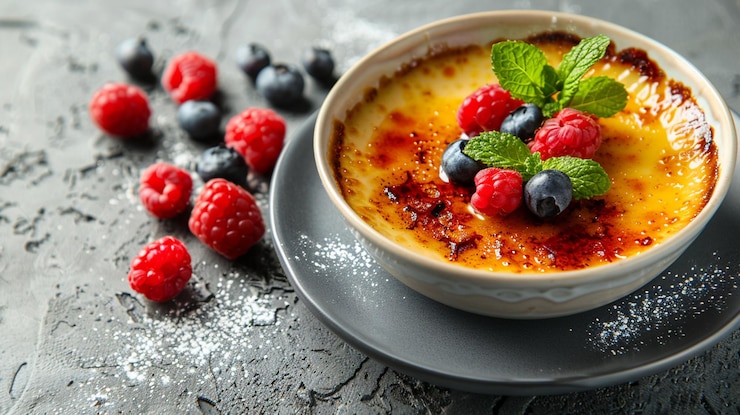
Salted caramel crème brûlée is an elegant dessert that combines silky baked custard with the rich sweetness of caramel and a delicate touch of salt. Beneath its crisp, glass-like sugar topping is a smooth vanilla custard that feels luxurious without requiring complicated ingredients. The contrast between the cold, creamy custard and the warm crack of freshly caramelised sugar makes every spoonful especially satisfying. Although crème brûlée has a reputation for being a restaurant-style dessert, it is surprisingly achievable in a home kitchen when you follow a few simple techniques. Preparing the custards ahead of time also makes this dessert particularly useful for dinner parties because most of the work can be completed before guests arrive. The salted caramel flavour adds something special to the classic recipe while still allowing the vanilla and cream to shine through. With the right temperature, a gentle baking method and a careful approach to caramelising the sugar, you can serve impressive salted caramel crème brûlée at your next dinner party.
What Makes Salted Caramel Crème Brûlée Special?
Classic crème brûlée consists of a rich baked custard topped with a thin layer of caramelised sugar. Salted caramel adds another dimension by introducing a balance between sweet, buttery caramel notes and a subtle savoury finish.
The custard itself should be smooth and creamy rather than firm or rubbery. Egg yolks provide structure while cream gives the dessert its luxurious texture.
Vanilla is also important because it adds depth to the caramel flavour. A good vanilla extract works beautifully, while vanilla bean can create an even more pronounced flavour.
The final layer of sugar is what gives crème brûlée its signature texture. When heated with a kitchen torch, the sugar melts and caramelises into a brittle topping that cracks beneath a spoon.
Ingredients for Salted Caramel Crème Brûlée
This recipe makes six individual portions.
For the Custard
- 500 ml double cream
- 100 ml full-cream milk
- 6 large egg yolks
- 80 g caster sugar
- 100 g soft caramel or dulce de leche
- 5 ml vanilla extract
- 2.5 ml fine sea salt
For the Caramel Topping
- 60 to 75 g caster sugar
- A small pinch of flaky sea salt
The amount of sugar required for the topping depends on the size of your ramekins. You need enough to create a thin, even layer rather than a thick coating.
How to Make Salted Caramel Crème Brûlée
Step 1: Prepare the Ramekins
Preheat the oven to 150°C.
Place six small ramekins in a deep roasting dish.
The ramekins should be heatproof and preferably similar in size so the custards bake evenly.
Keep them ready while you prepare the custard mixture.
Step 2: Warm the Cream
Pour the cream and milk into a saucepan.
Heat gently over medium-low heat until the mixture is hot but not boiling.
Add the vanilla extract and salt.
Stir in the caramel until it has completely dissolved into the warm cream.
Remove the saucepan from the heat.
Avoid allowing the cream to boil because excessive heat can affect the texture of the finished custard.
Step 3: Whisk the Egg Yolks
Place the egg yolks and caster sugar in a large mixing bowl.
Whisk gently until the mixture becomes slightly lighter and smooth.
Do not whisk aggressively. You want to combine the ingredients without incorporating a large amount of air.
Step 4: Temper the Eggs
This is one of the most important steps in making smooth crème brûlée.
Slowly pour a small amount of the warm cream mixture into the egg yolks while whisking continuously.
Gradually add more cream while continuing to whisk gently.
Once the egg mixture has warmed, pour everything back into the saucepan.
This process is called tempering and prevents the hot cream from cooking the egg yolks too quickly.
Step 5: Strain the Custard
Pour the custard through a fine-mesh sieve into a jug or large measuring cup.
This removes any small pieces of cooked egg and helps create an exceptionally smooth texture.
If there is foam on the surface, skim it away with a spoon.
Step 6: Fill the Ramekins
Carefully divide the custard between the six ramekins.
Fill them evenly, leaving a small amount of space at the top.
Place the roasting dish containing the ramekins into the oven.
Step 7: Add the Water Bath
Pour hot water into the roasting dish until it reaches approximately halfway up the sides of the ramekins.
Be careful not to splash water into the custard.
The water bath provides gentle, even heat and helps prevent the custard from cooking too quickly around the edges.
Step 8: Bake the Custards
Bake for approximately 30 to 40 minutes.
The edges should be set while the centres still have a gentle wobble when the ramekins are moved.
Do not wait until the custards are completely firm because they will continue to set as they cool.
Carefully remove the ramekins from the water bath.
Allow them to cool at room temperature before refrigerating.
Step 9: Chill Thoroughly
Cover the ramekins and refrigerate for at least four hours.
For a dinner party, making them the day before is even better.
The custard needs enough time to become completely chilled and develop its final texture.
How to Create the Perfect Caramelised Topping
The crisp sugar topping is one of the most enjoyable parts of crème brûlée.
Remove the chilled custards from the refrigerator.
Blot any moisture that has formed on the surface with a clean paper towel.
Sprinkle a thin, even layer of caster sugar over each custard.
Tilt each ramekin gently to distribute the sugar across the entire surface.
Shake off any excess sugar.
Use a kitchen blowtorch to caramelise the sugar.
Move the flame continuously across the surface rather than holding it in one place.
The sugar will first become wet and glossy, then begin to bubble and turn golden brown.
Continue until the entire surface has formed a thin caramelised crust.
Allow the topping to cool for one to two minutes.
Finish with a very small pinch of flaky sea salt.
Serve immediately so the caramel remains crisp.
How to Get a Smooth Crème Brûlée Custard
Smooth custard depends largely on gentle cooking.
Keep the cream below boiling point when heating it. Excessive heat can make tempering the eggs more difficult.
Whisk the egg yolks and sugar gently rather than creating a large amount of foam.
Straining the custard before baking is another useful step. Even if the mixture looks completely smooth, a fine sieve can remove tiny pieces of egg or undissolved ingredients.
The water bath is equally important because it provides a buffer against the direct heat of the oven.
Finally, avoid overbaking. The custard should still wobble slightly in the centre when it comes out of the oven.
Choosing the Right Salted Caramel
You can use prepared caramel sauce, dulce de leche or a homemade caramel sauce for this recipe.
Dulce de leche provides a thick, creamy caramel flavour and blends easily into the warm cream.
If using a very sweet caramel sauce, start with the smaller amount of added sugar in the custard and adjust the salt carefully.
The caramel should complement the vanilla and cream rather than completely overpower them.
A good-quality flaky sea salt can also provide a more interesting finish than ordinary table salt because the larger crystals deliver small bursts of salty flavour.
Homemade Salted Caramel Sauce
If you prefer to make the caramel yourself, this quick sauce can be prepared ahead of time.
Ingredients
- 150 g caster sugar
- 60 ml water
- 100 ml double cream
- 30 g unsalted butter
- 2.5 ml flaky sea salt
Method
Place the sugar and water in a small saucepan.
Heat over medium heat without stirring.
Allow the sugar to dissolve and continue cooking until it becomes a deep golden amber colour.
Remove the saucepan from the heat.
Carefully pour in the cream while whisking. The mixture will bubble vigorously, so take care to avoid splashes.
Add the butter and salt.
Stir until smooth.
Allow the caramel to cool slightly before using.
Use 100 g of the finished caramel for the crème brûlée custard and reserve the rest for serving.
Dinner Party Preparation Timeline
Crème brûlée is particularly well suited to entertaining because it can be prepared in stages.
The Day Before
Prepare and bake the custards.
Allow them to cool completely.
Cover and refrigerate overnight.
Prepare the caramel sauce if you are making your own.
A Few Hours Before Guests Arrive
Check that the custards are fully chilled.
Make sure your kitchen torch has enough fuel and is working correctly.
Measure the sugar for the topping so everything is ready.
Just Before Dessert
Sprinkle the sugar over the chilled custards.
Caramelise the tops with the kitchen torch.
Add a tiny pinch of flaky salt.
Serve immediately.
This approach means you can enjoy dinner with your guests rather than spending the evening in the kitchen.
Common Crème Brûlée Mistakes
Overcooking the Custard
An overbaked custard can become grainy or rubbery. Remove it while the centre still has a gentle wobble.
Boiling the Cream
The cream should be hot but not boiling. Gentle heating makes it easier to combine with the egg yolks.
Skipping the Water Bath
A water bath helps moderate the oven heat and promotes even cooking. It is especially useful when making delicate custards.
Adding Too Much Sugar
A thick layer of sugar can be difficult to caramelise evenly. Use a thin coating across the surface.
Burning the Sugar
Keep the torch moving continuously. Dark brown or black patches can taste bitter.
Serving Too Late
The caramel topping gradually absorbs moisture from the custard. Caramelise the tops shortly before serving for the best crackly texture.
Can You Make Crème Brûlée Without a Blowtorch?
Yes. A kitchen torch is the easiest option, but the sugar can also be caramelised under a very hot grill.
Place the chilled ramekins on a baking tray.
Sprinkle a thin layer of sugar over each custard.
Place them under a very hot grill and watch them closely.
The sugar can go from golden to burnt very quickly, so do not walk away.
Once the sugar has caramelised, return the ramekins to the refrigerator for a few minutes if necessary before serving.
A blowtorch generally gives you greater control, especially when working with small individual desserts.
Serving Ideas for Salted Caramel Crème Brûlée
Salted caramel crème brûlée is rich enough to serve on its own, but a few small additions can make it even more special.
Fresh berries provide acidity and colour. Raspberries, strawberries and blueberries all work well with caramel and vanilla.
Thin slices of pear or apple can also complement the warm caramel flavour.
For a South African-inspired touch, serve the crème brûlée with a small amount of finely chopped toasted macadamia nuts.
A light dusting of cinnamon can add warmth without overwhelming the caramel.
Keep accompaniments relatively simple because the contrast between creamy custard and crisp caramel is already the main attraction.
How to Store Crème Brûlée
The baked custards can be refrigerated for up to three days before caramelising.
Keep them covered in the refrigerator to prevent them from absorbing odours from other foods.
Do not add the sugar topping until shortly before serving.
Once caramelised, the topping is best enjoyed immediately because it gradually softens as it absorbs moisture from the custard.
If you are preparing dessert for a dinner party, keep the custards refrigerated and caramelise each one shortly before bringing it to the table.
Easy Flavour Variations
Once you have mastered salted caramel crème brûlée, there are several ways to adapt the basic recipe.
Orange and Salted Caramel
Add finely grated orange zest to the warm cream for a bright citrus note.
Coffee and Salted Caramel
Add a small amount of strong espresso or instant espresso powder to the cream for a coffeehouse-inspired dessert.
Chocolate and Salted Caramel
Stir finely chopped dark chocolate into the warm cream until completely melted before combining it with the eggs.
Cinnamon Salted Caramel
Add a cinnamon stick to the cream while it warms, then remove it before tempering the eggs.
Rooibos Salted Caramel
For a South African-inspired variation, infuse the warm cream with strong rooibos tea before straining and continuing with the recipe.
Tips for a Successful Dinner Party Dessert
Choose ramekins that are similar in size so all the custards bake at approximately the same rate.
Prepare more portions than you think you need if you are hosting a large gathering. Individual desserts are easier to serve than one large custard.
Keep the caramelisation process until the last possible moment. The crisp topping is at its best when freshly made.
Have your serving plates ready before using the kitchen torch.
If you are making the dessert for the first time, practise caramelising a small amount of sugar on a heatproof surface before working on the chilled custards.
Salted caramel crème brûlée is an impressive dinner party dessert that delivers a beautiful combination of silky custard, rich caramel and delicate saltiness. The recipe may look sophisticated, but the actual preparation is straightforward when each stage is handled carefully. Tempering the eggs, baking the custard gently in a water bath and chilling it thoroughly are the key steps for achieving a smooth texture. The caramelised sugar topping provides the dramatic finishing touch and creates the satisfying crack that makes crème brûlée so memorable. Preparing the custards a day ahead also makes this dessert especially practical for entertaining because the final caramelisation can be completed just before serving. Fresh berries, toasted nuts, citrus zest or a subtle South African-inspired rooibos infusion can add a personal touch without taking attention away from the classic flavours. With its make-ahead convenience and elegant presentation, this easy salted caramel crème brûlée is a dessert that can bring a memorable finish to your next dinner party.