
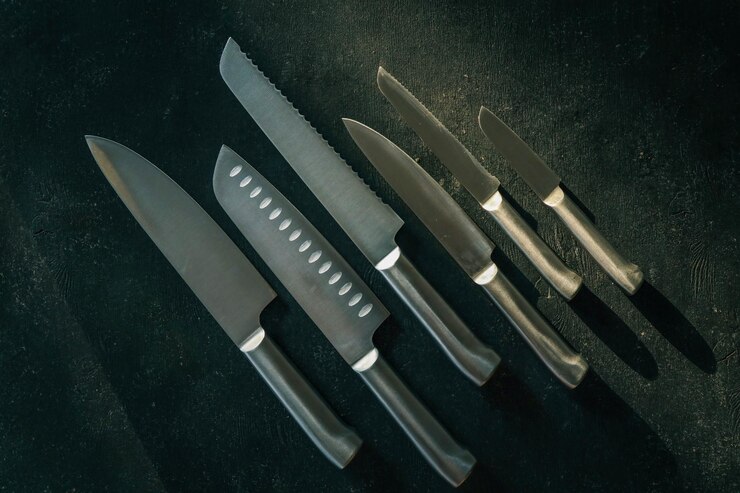
A well-stocked kitchen begins with the right knives. Having a few essential knives makes cooking more efficient, precise, and enjoyable. Too many knives can be confusing and unnecessary, while the right selection allows you to handle almost any task with ease. Understanding the types of knives, their uses, and how to choose them ensures you invest in tools that last and perform well. This guide explains the kitchen knives you actually need and how to select the best ones for your cooking style.
1. Chef’s Knife
- The chef’s knife is the most versatile and essential knife in any kitchen.
- Typically 20–25cm long, it can chop, slice, dice, and mince vegetables, herbs, and meats.
- Look for a knife with a balanced weight, comfortable handle, and a sharp, sturdy blade.
2. Paring Knife
- Paring knives are small knives with blades around 7–10cm, ideal for precision tasks.
- Use them for peeling, trimming, and intricate cuts on fruits and vegetables.
- Choose a paring knife with a comfortable grip and a sharp, tapered blade for control.
3. Bread Knife
- Bread knives have long serrated blades that easily cut through crusty bread without crushing it.
- They can also slice cakes, pastries, and soft fruits like tomatoes.
- A knife with a sturdy handle and a sharp, well-spaced serration works best.
4. Utility Knife
- Utility knives fall between a chef’s knife and a paring knife, typically 12–18cm long.
- They are perfect for cutting sandwiches, trimming meat, or slicing vegetables when a chef’s knife feels too large.
- Look for a straight-edged, well-balanced blade.
5. Carving Knife
- Carving knives are long, thin knives designed to slice cooked meats, poultry, and roasts.
- They provide clean, even slices without tearing fibers.
- Choose a knife with a sharp, flexible blade for precision and control.
How to Choose the Right Knives
Blade Material
- High-carbon stainless steel blades offer durability, corrosion resistance, and long-lasting sharpness.
- Ceramic blades are lightweight and maintain their edge but are more fragile and prone to chipping.
Handle Comfort
- Look for ergonomic handles that fit comfortably in your hand.
- Materials like wood, plastic, and composite are common; choose based on grip, hygiene, and maintenance preferences.
Blade Length and Weight
- Blade length affects control and cutting style. Longer blades handle large vegetables and meats, while shorter blades allow precision.
- The knife should feel balanced in your hand; the weight should feel natural without straining your wrist.
Maintenance
- Regular sharpening maintains performance. Honing steel keeps edges aligned between sharpening sessions.
- Hand wash knives and dry immediately to prevent corrosion. Avoid putting high-quality knives in the dishwasher.
Additional Tips
- Start with essential knives: chef’s knife, paring knife, and bread knife. Add others as needed.
- Test knives in person if possible to ensure comfort and balance.
- Invest in quality over quantity; a few excellent knives outperform a large set of low-quality knives.
A small selection of high-quality knives is all you need for efficient, precise cooking. A chef’s knife, paring knife, and bread knife cover most tasks, while a utility or carving knife can be added for specialized uses. When choosing knives, consider blade material, handle comfort, weight, and maintenance. With the right tools, your cooking becomes safer, faster, and more enjoyable, and you can confidently prepare any meal with precision and ease.