
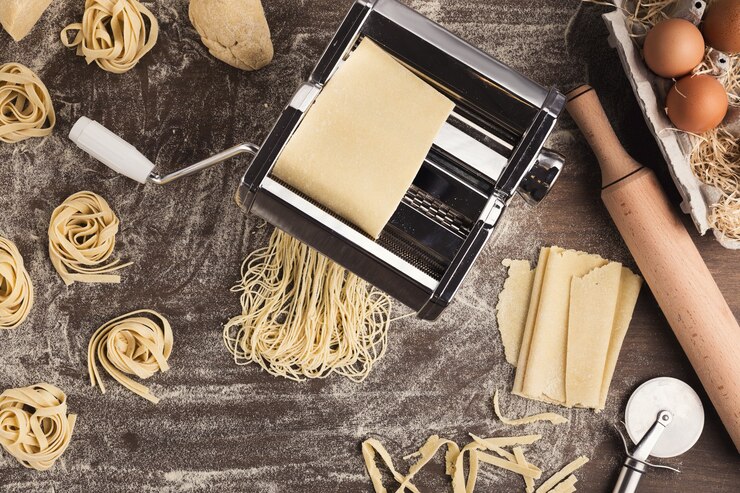
Making pasta from scratch can seem intimidating, but the right tools make the process straightforward and enjoyable. Fresh pasta tastes richer and has a better texture than store-bought varieties, and using simple kitchen tools can save time, reduce mess, and improve consistency. Whether you want fettuccine, ravioli, or lasagna, having the right equipment transforms pasta-making from a chore into a creative experience.
Here’s a guide to essential tools that simplify homemade pasta.
1. Pasta Machine
A pasta machine is one of the most valuable tools for rolling and cutting dough evenly. Manual or electric models allow you to adjust thickness settings and create uniform sheets of pasta for tagliatelle, fettuccine, or lasagna.
Benefits:
- Smooth, even dough sheets.
- Adjustable thickness for different pasta types.
- Cuts multiple shapes with interchangeable attachments.
Tips:
- Lightly flour the dough to prevent sticking.
- Pass the dough through the machine multiple times for a smooth texture.
2. Rolling Pin
For those without a pasta machine, a rolling pin works well for thinner dough. Wooden or silicone rolling pins are preferred because they provide control over thickness.
Benefits:
- Greater control for hand-rolled pasta.
- Useful for pizza, pie, and pastry as well.
Tips:
- Roll dough evenly from the center outward.
- Dust both the surface and dough with flour to prevent sticking.
3. Bench Scraper
A bench scraper is a small, flat tool with a handle, ideal for cutting and portioning pasta dough.
Benefits:
- Quickly divide dough for different pasta shapes.
- Helps transfer cut pasta to drying racks or trays.
Tips:
- Use it to clean your work surface after kneading.
- Press firmly for clean cuts on rolled dough.
4. Pasta Drying Rack
Fresh pasta can stick together if left in a heap. A pasta drying rack keeps noodles separated while drying slightly before cooking.
Benefits:
- Prevents clumping.
- Allows air circulation for even drying.
Tips:
- Dust noodles lightly with flour before hanging.
- Don’t leave pasta for more than a few hours if you plan to cook immediately.
5. Ravioli or Dumpling Molds
Ravioli molds or trays simplify filling and shaping stuffed pasta. They ensure consistent size and reduce mess.
Benefits:
- Even, professional-looking shapes.
- Reduces handling and dough tearing.
Tips:
- Use a light dusting of flour to prevent sticking.
- Seal edges with water or egg wash for secure closure.
6. Pasta Cutter Wheels
Pasta cutter wheels allow you to cut dough into various widths, such as tagliatelle, pappardelle, or decorative edges for ravioli.
Benefits:
- Consistent cuts and professional presentation.
- Serrated wheels create decorative edges for filled pasta.
Tips:
- Press lightly to avoid tearing dough.
- Use a ruler or guide to maintain uniform widths.
7. Digital Kitchen Scale
Consistency is key for pasta dough, and a scale ensures precise measurements for flour, eggs, and water.
Benefits:
- Accurate, repeatable recipes.
- Reduces errors from cup measurements.
Tips:
- Zero the scale between ingredients.
- Measure ingredients directly into your mixing bowl for less cleanup.
8. Food Processor
A food processor can mix and knead pasta dough quickly, saving time and effort.
Benefits:
- Shortens kneading time.
- Ensures even mixing of ingredients.
Tips:
- Pulse initially, then process continuously until dough forms a ball.
- Avoid over-processing, which can make dough too dense.
Homemade pasta doesn’t have to be complicated. With the right tools, you can simplify every step, from mixing and rolling to cutting and shaping. A pasta machine or rolling pin ensures smooth sheets, cutting tools create even shapes, and drying racks prevent sticking. By incorporating these essential tools, you can enjoy fresh, flavorful pasta with less stress and more consistent results, making every meal feel like it came from an Italian kitchen.