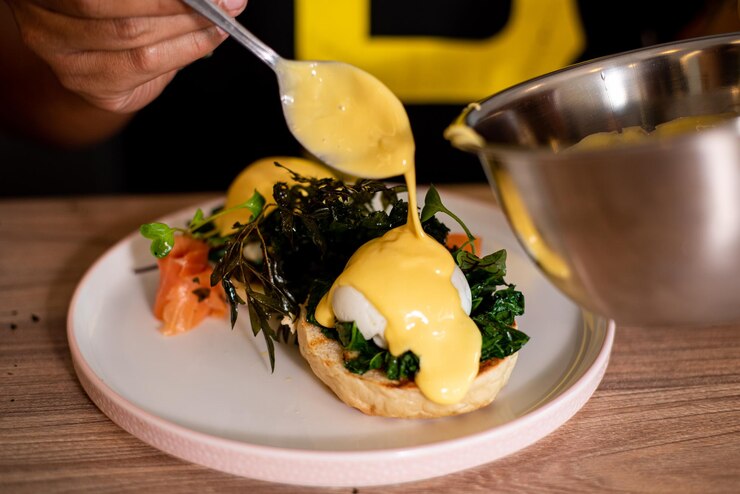
Hollandaise sauce is a classic French sauce known for its creamy texture and rich, buttery flavor. It pairs perfectly with eggs Benedict, asparagus, and fish dishes, but it can be intimidating to make. Many home cooks struggle with curdling, thin consistency, or an overpowering flavor. Understanding common mistakes and knowing how to fix them ensures you can create a smooth, stable hollandaise every time.
Mistake 1: Overheating the Eggs
Eggs are delicate and can scramble if exposed to high heat. When making hollandaise over a double boiler, keep the water at a gentle simmer rather than a rolling boil. If the sauce starts to curdle, remove it from heat immediately and whisk in a teaspoon of cold water to bring it back together.
Mistake 2: Adding Butter Too Quickly
Adding melted butter too fast can cause the sauce to separate. Pour butter in a slow, steady stream while continuously whisking. If the sauce begins to split, remove the bowl from heat and whisk in a teaspoon of warm water, then continue adding butter slowly.
Mistake 3: Not Maintaining a Stable Temperature
Hollandaise needs a consistent temperature to emulsify properly. If the sauce is too cold, it won’t thicken; if it’s too hot, it will curdle. Keep the bowl over gently simmering water and remove it periodically to control heat. A quick test is to touch the side of the bowl; it should feel warm but not hot.
Mistake 4: Using the Wrong Type of Whisking Technique
Rapid, inconsistent whisking can break the emulsion. Use steady, circular motions and keep the whisk moving continuously. If the sauce begins to separate, transfer it to a clean bowl and whisk in a small amount of warm water to restore smoothness.
Mistake 5: Over-seasoning or Under-seasoning
Hollandaise is delicate, so balancing acidity and salt is key. Add lemon juice gradually, tasting as you go. Too much acid can make the sauce thin; too little results in a flat taste. Salt should enhance the butter’s flavor without overpowering the sauce.
Tips for Perfect Hollandaise Every Time
Use fresh, room-temperature eggs for a stable emulsion.
Prepare ingredients before starting to avoid rushing.
If the sauce fails completely, blend it with an immersion blender over low heat to bring it back together.
Serve immediately or keep warm over a very low heat; avoid reheating.
Mastering hollandaise requires attention to heat, timing, and technique. By avoiding common mistakes and applying these fixes, you can create a creamy, balanced sauce that elevates any dish. With practice, making hollandaise becomes straightforward, allowing you to impress with this classic French favorite every time.