A perfectly pan-fried steak with a crispy, golden crust and a juicy centre is one of the most satisfying meals you can make at home. You do not need a barbecue or professional kitchen equipment to achieve restaurant-quality results, just a good frying pan, quality beef and the right technique. The secret lies in preparing the steak properly, getting the pan hot enough and allowing the meat to develop a rich, caramelised crust. Choosing the right cut also makes a difference, as ribeye, sirloin and rump each offer their own balance of tenderness, flavour and texture. With a few simple steps, you can cook steak that is beautifully browned on the outside while remaining tender and succulent inside. Whether you prefer your steak medium-rare or well done, understanding heat control and cooking times helps you achieve more consistent results. This guide explains how to pan-fry steak step by step, with a full recipe, practical cooking tips and flavourful variations to help you master this classic dish.
Choosing the Best Steak for Pan-Frying
The cut of beef you choose influences the flavour, tenderness and final texture of your steak. For pan-frying, look for steaks that are evenly cut and around 2.5 to 4 cm thick, as thicker steaks are easier to brown without overcooking the centre.
Here are some popular options:
- Ribeye: Richly marbled with fat, making it flavourful and juicy when cooked in a hot pan.
- Sirloin: A versatile cut with a satisfying beefy flavour and a balance of tenderness and texture.
- Rump steak: Often more affordable, with a robust flavour that works well when cooked carefully and sliced against the grain.
- Fillet steak: Exceptionally tender and relatively lean, making it ideal for those who prefer a delicate texture.
For the best crust, choose steaks with a reasonably dry surface and consistent thickness. A little marbling helps keep the meat flavourful, while very thin steaks can cook through before a deep golden crust develops.
Ingredients for Perfect Pan-Fried Steak
This straightforward recipe serves two and uses basic ingredients to let the natural flavour of the beef shine.
Ingredients
- 2 beef steaks, approximately 250 to 300 g each
- 1 tablespoon vegetable oil or another high-heat cooking oil
- 1 tablespoon butter
- 2 garlic cloves, lightly crushed
- 2 sprigs fresh thyme or rosemary
- Salt, to taste
- Freshly ground black pepper, to taste
Equipment
- A heavy-based frying pan, preferably cast iron or stainless steel
- Kitchen tongs
- Paper towels
- A meat thermometer, if available
- A plate or board for resting the steak
How to Pan-Fry Steak Step by Step
1. Prepare the Steak
Remove the steak from the refrigerator shortly before cooking so the chill can ease slightly, especially if the meat is thick. Pat both sides thoroughly dry with paper towels. Removing surface moisture is essential because wet meat tends to steam before it browns.
Season generously with salt and freshly ground black pepper. You can season just before cooking or salt the steak in advance and keep it refrigerated. If seasoning ahead, pat away any moisture that collects on the surface before frying.
2. Heat the Pan Properly
Place a heavy frying pan over medium-high to high heat and allow it to become thoroughly hot. Add the oil and swirl it around to coat the cooking surface.
The oil should shimmer but should not produce excessive smoke. A properly heated pan helps the steak develop a deep brown crust through the Maillard reaction, the process responsible for many of the savoury flavours associated with browned meat.
Avoid overcrowding the pan. If the steaks are large or your pan is small, cook them one at a time so the temperature remains high enough for proper browning.
3. Sear the Steak Without Moving It
Carefully lay the steak into the hot pan, placing it away from you to reduce splashing. You should hear an immediate, steady sizzle.
For a steak approximately 2.5 cm thick, begin by searing the first side for around 2 to 3 minutes. Turn it with tongs and cook the other side for another 2 to 3 minutes, adjusting the timing according to thickness and your preferred doneness.
Avoid pressing down on the meat with a spatula. This does not improve the crust and can force juices out of the steak.
4. Add Butter, Garlic and Herbs
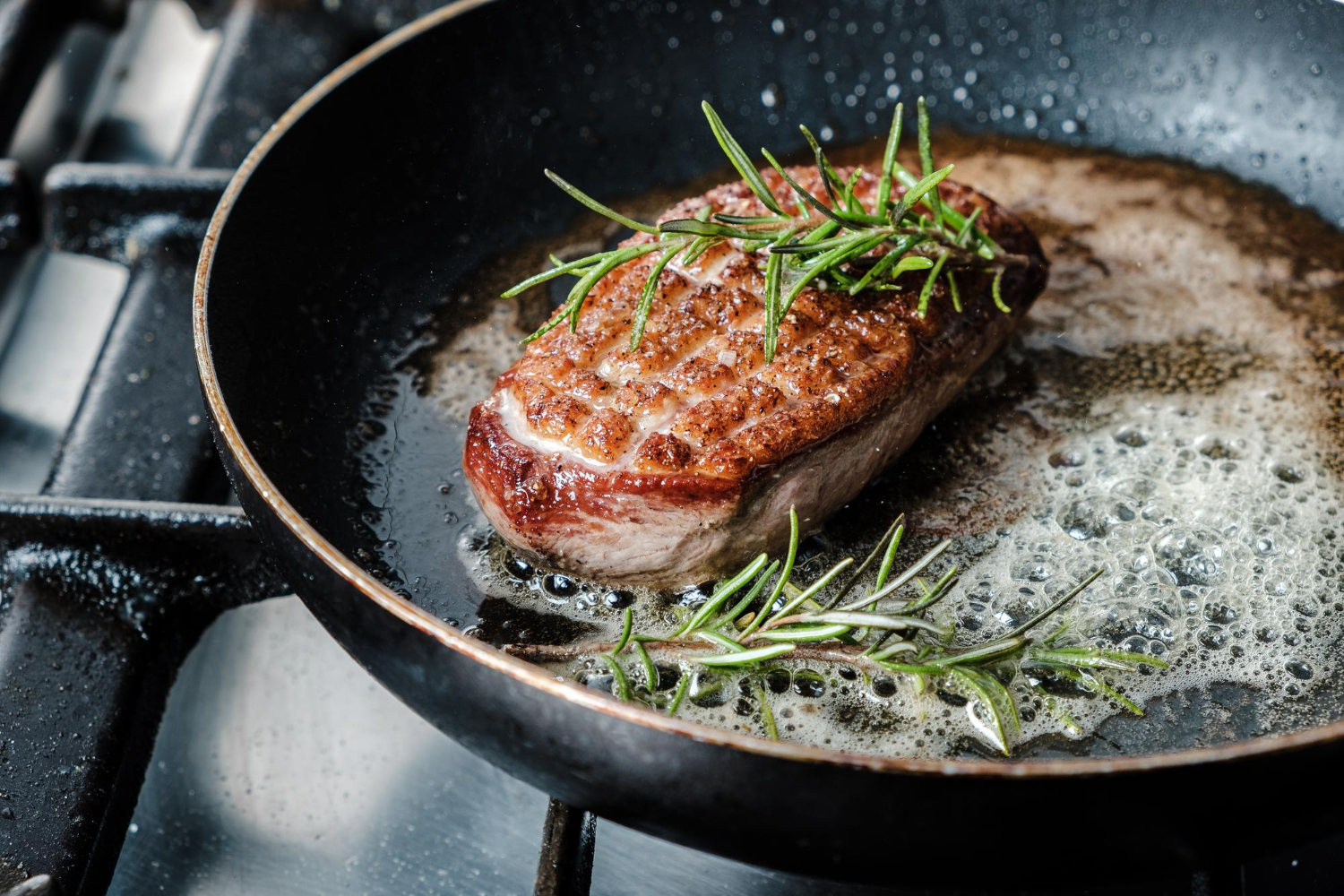
Once both sides have developed a golden-brown crust, reduce the heat to medium. Add the butter, crushed garlic and thyme or rosemary to the pan.
When the butter melts and begins to foam, tilt the pan slightly so the melted butter collects on one side. Use a spoon to repeatedly pour the aromatic butter over the steak for about 30 to 60 seconds, taking care not to burn the garlic or butter.
This technique, often called butter-basting, adds richness and a fragrant finish. If the butter begins to darken too quickly, lower the heat.
5. Check the Centre for Doneness
Cooking time depends on steak thickness, pan temperature and the cut of beef. Rather than relying entirely on the clock, use an instant-read meat thermometer inserted into the thickest part of the steak.
For whole beef steaks, the following temperatures are useful culinary doneness guides. They are not the same as conservative food-safety recommendations.
| Doneness | Approximate internal temperature |
|---|---|
| Rare | 50–52°C |
| Medium-rare | 55–57°C |
| Medium | 60–63°C |
| Medium-well | 65–68°C |
| Well done | 71°C and above |
For food safety, official guidance recommends cooking whole beef steaks to at least 63°C and resting for 3 minutes. People who are pregnant, older, immunocompromised or otherwise at higher risk should take particular care with undercooked meat.
Remember that the steak’s temperature can rise slightly while resting, so remove it from the pan with the intended carryover cooking in mind.
6. Rest Before Slicing
Transfer the steak to a warm plate or board and leave it to rest for around 5 to 10 minutes, depending on thickness. Resting allows the temperature to even out and helps the juices remain in the meat when you cut it.
Avoid covering the steak tightly with foil, as trapped steam can soften the crisp crust. If you prefer, loosely tent it with foil while it rests.
When ready to serve, slice against the grain for a more tender bite, particularly with cuts such as rump and sirloin.
Tips for a Crispy, Golden Crust and Juicy Centre
Small details can make a noticeable difference when pan-frying steak. Keep these techniques in mind for better results.
- Dry the surface thoroughly: Moisture prevents rapid browning, so always pat the steak dry before seasoning and cooking.
- Preheat the pan: A properly heated pan encourages a deep, even crust rather than a grey, steamed exterior.
- Choose the right oil: Use an oil that can tolerate high cooking temperatures, such as refined canola or sunflower oil.
- Leave space between steaks: Too much meat in the pan lowers the temperature and makes browning less effective.
- Use a thermometer: Thickness and heat vary, so checking the internal temperature is more reliable than following a fixed cooking time.
- Baste near the end: Butter adds flavour, but adding it too early over very high heat can cause it to burn.
- Rest before serving: Give the steak time to settle before slicing to help preserve its juices.
Easy Garlic Butter Pan-Fried Steak Recipe
For an extra flavourful finish, try this garlic butter variation. It follows the same cooking method but adds a simple sauce made from the buttery juices left in the pan.
Ingredients
- 2 beef steaks
- 1 tablespoon high-heat cooking oil
- 2 tablespoons butter
- 3 garlic cloves, finely chopped or lightly crushed
- 1 teaspoon chopped fresh rosemary
- 1 teaspoon chopped fresh parsley
- Salt and black pepper, to taste
- 1 teaspoon lemon juice, optional
Method
- Pat the steaks dry and season both sides with salt and black pepper.
- Heat the oil in a heavy frying pan over medium-high to high heat until shimmering.
- Add the steaks and sear for approximately 2 to 3 minutes per side for steaks around 2.5 cm thick, adjusting for thickness and preferred doneness.
- Reduce the heat to medium and add the butter, garlic and rosemary.
- Spoon the melted butter over the steaks for 30 to 60 seconds, keeping the garlic moving so it does not burn.
- Check the internal temperature with a meat thermometer and cook for longer if needed.
- Transfer the steaks to a plate and rest for 5 to 10 minutes.
- Stir the parsley and optional lemon juice into the remaining pan butter, then spoon it over the steak just before serving.
Serve with roasted potatoes, steamed vegetables, a crisp green salad or creamy mashed potatoes for a satisfying meal.
What to Serve with Pan-Fried Steak
Pan-fried steak pairs beautifully with side dishes that complement its rich, savoury flavour without overpowering it. For a classic meal, serve it with golden potato wedges, roasted baby potatoes or creamy mashed potatoes.
Vegetables provide colour and freshness. Try green beans, asparagus, broccoli or carrots sautéed with a little garlic and butter. A tomato and onion salad can also balance the richness of the beef, especially on warm days.
Sauces are another way to customise your meal. Garlic butter is quick and simple, while a creamy pepper sauce adds richness and gentle heat. For something lighter, serve the steak with chimichurri made from parsley, garlic, vinegar, olive oil and herbs.
Common Steak-Cooking Mistakes to Avoid
One common mistake is placing steak into a cold pan. Without enough heat, the meat releases moisture and may turn grey instead of developing a deep crust. Another is repeatedly turning the steak before it has had time to brown properly.
Using too much butter over intense heat can also spoil the flavour, as burnt butter and garlic become bitter. Start with high heat for searing, then reduce it when adding butter and aromatics.
Finally, avoid cutting into the steak immediately after cooking. Resting is a small but important step that helps maintain a juicy texture. With practice, you will become more confident at judging the right heat, timing and doneness for your preferred cut.
Learning how to pan-fry steak with a crispy, golden crust and a juicy centre is easier when you focus on a few essential techniques. Choose a good-quality cut, dry the surface thoroughly and heat the pan properly before adding the meat. Give each side enough time to brown, then use butter, garlic and fresh herbs to build an extra layer of flavour. Check the internal temperature rather than relying on cooking times alone, especially when working with thicker steaks. Resting the meat before slicing helps preserve its texture and makes every bite more satisfying. Pair your steak with simple sides such as roasted potatoes, fresh vegetables or a crisp salad to create a balanced meal. With these practical tips and the recipes in this guide, you can enjoy delicious, beautifully seared steak at home whenever the craving strikes.