
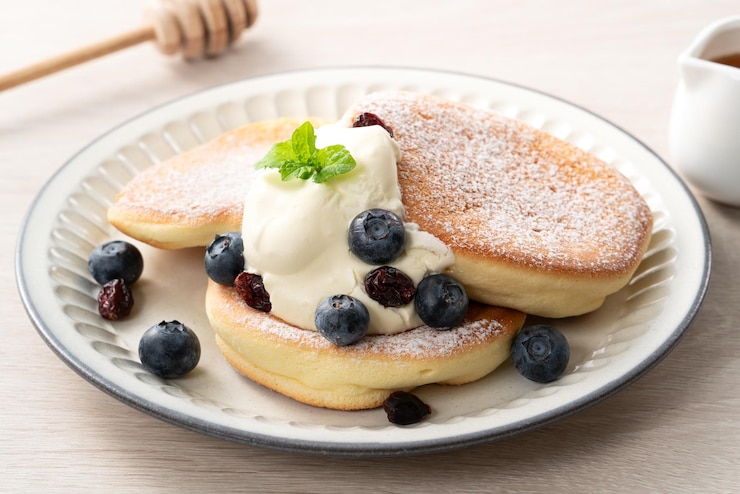
Soufflé pancakes have become famous for their incredibly soft texture, impressive height, and cloud-like appearance. These delicate pancakes originated in Japan and quickly gained popularity around the world because of their light and airy consistency. While they may look difficult to make, beginners can achieve excellent results by understanding a few important techniques. The secret lies in creating a stable batter that traps air while remaining smooth and easy to cook. Many failed attempts happen because of overmixed batter, unstable egg whites, or incorrect cooking temperatures. Once you learn the fundamentals, making soufflé pancakes becomes much less intimidating. This guide shares the no-fail batter secrets that will help beginners create fluffy, tall pancakes every time.
What Makes Soufflé Pancakes Different?
Unlike traditional pancakes, soufflé pancakes rely heavily on whipped egg whites to create their signature height. The air trapped inside the meringue expands during cooking, producing a soft and airy texture. This technique is similar to making a soufflé, which is where the pancakes get their name. The batter itself contains very little flour compared to regular pancakes. Gentle folding preserves the air bubbles that give the pancakes their lift. Slow cooking at a low temperature helps them rise evenly without burning. Understanding these basics is the first step toward success.
The Most Important Soufflé Pancake Batter Secrets
Use Room Temperature Eggs
Room temperature eggs whip more easily and create a more stable meringue. Cold eggs can make it difficult to achieve the volume needed for fluffy pancakes.
Whip Egg Whites Properly
The meringue should reach stiff peaks. When you lift the whisk, the peaks should stand upright without collapsing. Under-whipped whites create flat pancakes, while over-whipped whites can make folding difficult.
Fold Gently
The goal is to preserve as much air as possible. Use a spatula and fold carefully rather than stirring aggressively. Rough mixing deflates the batter and reduces height.
Cook Low and Slow
High heat causes the outside to cook too quickly while leaving the center undercooked. A low temperature allows the pancakes to rise gradually and cook evenly.
Use a Lid During Cooking
Covering the pan traps steam, which helps cook the pancakes all the way through while maintaining moisture.
No-Fail Soufflé Pancake Recipe
Ingredients
2 large eggs, separated
30 ml milk
1/2 tsp vanilla extract
35 g cake flour or all-purpose flour
1/4 tsp baking powder
30 g sugar
1 tsp vegetable oil
Butter for greasing the pan
Method
- Separate the eggs into two bowls.
- Add milk and vanilla extract to the egg yolks and whisk until combined.
- Sift flour and baking powder into the yolk mixture and mix until smooth.
- In a separate bowl, beat the egg whites until foamy.
- Gradually add sugar while continuing to beat.
- Whip until stiff, glossy peaks form.
- Add one-third of the meringue to the yolk mixture and mix gently.
- Fold in the remaining meringue in two additions using a spatula.
- Heat a non-stick pan over very low heat and lightly grease it.
- Spoon tall mounds of batter into the pan.
- Add a teaspoon of water beside the pancakes and cover with a lid.
- Cook for 4 to 5 minutes.
- Carefully flip the pancakes.
- Add another teaspoon of water, cover, and cook for an additional 4 to 5 minutes.
- Serve immediately.
Common Mistakes Beginners Should Avoid
Overmixing the Batter
Overmixing removes the air bubbles that create height. Fold only until the ingredients are combined.
Using High Heat
Many beginners try to speed up the process. This usually results in burnt outsides and raw centers.
Skipping the Lid
The trapped steam helps cook the thick pancakes evenly. Without a lid, the centers may remain undercooked.
Unstable Meringue
If the egg whites are not whipped enough, the batter will lack structure. Always aim for stiff peaks.
Letting the Batter Sit Too Long
Cook the pancakes soon after mixing. The batter begins losing air over time, reducing volume.
Delicious Topping Ideas
Soufflé pancakes pair beautifully with fresh berries, sliced bananas, and whipped cream. A drizzle of maple syrup enhances their light sweetness without overpowering the flavor. For a richer option, try chocolate sauce and toasted nuts. Lemon curd adds brightness and balances the sweetness. Fresh fruit compotes also complement the airy texture. Powdered sugar provides a simple and elegant finish. The toppings can be customized to suit any occasion.
How to Know When Soufflé Pancakes Are Perfect
Perfect soufflé pancakes should be tall, evenly golden, and spring back lightly when touched. The interior should feel soft and fluffy rather than dense. They should hold their shape for several minutes after cooking. The texture should be moist without being wet. The surface should remain smooth and slightly delicate. When cut open, the inside should resemble a light sponge cake. These signs indicate that the batter and cooking method were successful.
Soufflé pancakes may look challenging, but the process becomes straightforward once you understand the key techniques. The quality of the meringue, gentle folding, and low-temperature cooking are the foundations of success. By following these no-fail batter secrets, even beginners can create pancakes that are light, fluffy, and impressively tall. The recipe uses simple ingredients that are often already available in most kitchens. With practice, the process becomes easier and more consistent. These pancakes make a wonderful breakfast, brunch, or special weekend treat. Mastering soufflé pancake batter opens the door to one of the most satisfying homemade breakfast experiences you can create.