Few homemade treats are as tempting as freshly made doughnuts, with their golden colour, soft centres and delicious toppings. Whether coated in cinnamon sugar, dipped in chocolate or finished with a simple glaze, doughnuts bring a little bakery magic into your kitchen. When making them at home, one of the biggest decisions is whether to bake them in the oven or fry them in hot oil. Baked doughnuts offer a lighter texture and a convenient preparation method, while fried doughnuts deliver the traditional golden exterior and rich flavour many people associate with classic bakery favourites. Both methods have their advantages, and the best choice depends on your taste preferences, available equipment and the amount of time you want to spend cooking. Understanding how baking and frying affect texture, flavour and preparation can help you choose the right recipe for your next homemade baking session. In this guide, we compare baked and fried doughnuts, explore their differences and share two simple recipes so you can make both versions at home.
Baked vs Fried Doughnuts: What Is the Difference?
The main difference between baked and fried doughnuts is how the dough cooks. Baked doughnuts are prepared in an oven, where surrounding heat sets the batter or dough and creates a soft, cake-like or bread-like texture. Fried doughnuts cook in hot oil, which quickly forms a golden crust while keeping the inside tender.
The ingredients also influence the final result. Many baked doughnut recipes use a cake-style batter with baking powder, while traditional fried doughnuts often use yeast dough that rises before cooking. However, both baked and fried doughnuts can be made with either yeast-based or cake-style mixtures, depending on the recipe.
Baked Doughnuts
Baked doughnuts are often soft, tender and similar to small cakes, especially when made with a quick batter. They require little or no added cooking oil, although the recipe may contain butter or other fats. A doughnut pan gives them their familiar ring shape, and toppings can be added after baking.
Fried Doughnuts
Fried doughnuts usually have a crisp, golden exterior and a soft, fluffy interior when prepared correctly. The hot oil creates a distinctive flavour and texture that is difficult to reproduce in the oven. Yeast-raised versions are especially light and airy, making them ideal for classic sugar-coated or glazed doughnuts.
Which Doughnut Is Better: Baked or Fried?
Neither method is automatically better because each produces a different kind of treat. Your preferred version depends on whether you value convenience, a traditional fried finish, a cake-like crumb or the experience of making classic bakery-style doughnuts.
| Feature | Baked doughnuts | Fried doughnuts |
|---|---|---|
| Texture | Soft, tender and often cake-like | Golden outside with a soft centre |
| Flavour | Mild, similar to a small cake | Richer, with a characteristic fried finish |
| Cooking method | Oven baking | Deep-frying in hot oil |
| Equipment | Oven and preferably a doughnut pan | Heavy pot or deep fryer and a thermometer |
| Added cooking oil | Usually little or none beyond the recipe | Absorbs some oil during frying |
| Preparation | Often quicker with cake-style batter | Yeast versions need time to rise |
| Best toppings | Glaze, icing, fruit and sprinkles | Cinnamon sugar, glaze, chocolate and fillings |
Texture and Flavour
Fried doughnuts generally win when you want the classic bakery experience. Properly fried dough develops a lightly crisp surface that contrasts with the fluffy interior. The hot oil also contributes to the characteristic flavour and golden colour.
Baked doughnuts have their own appeal. They are often more delicate and cake-like, with a softer crust and a texture that pairs particularly well with flavoured icing. A baked doughnut made with yoghurt, buttermilk or melted butter can be moist and delicious without needing a deep fryer.
Preparation and Convenience
Baked doughnuts are often easier for beginners, particularly when using a quick-mix recipe. You simply prepare the batter, fill the doughnut moulds and bake. There is no need to monitor a pot of hot oil or cook each doughnut in batches.
Fried doughnuts require more attention because the oil temperature needs to remain steady. If the oil is too cool, the doughnuts may absorb excess oil. If it is too hot, the outside can brown before the centre cooks properly. Yeast-raised recipes also require time for the dough to rise, although this resting time does not require constant attention.
Nutrition and Oil Content
Baked doughnuts generally contain less added fat from cooking because they do not need to be submerged in oil. However, their overall nutritional content depends on the ingredients, portion size and toppings.
Fried doughnuts absorb some oil during cooking, so they may contain more fat than a comparable baked version. Neither method automatically makes a doughnut a healthy food, especially when generous amounts of sugar, chocolate or icing are added. Both are best enjoyed as occasional treats as part of a varied diet.
Simple Baked Vanilla Doughnuts
These easy baked vanilla doughnuts are ideal if you want a homemade treat without the extra steps involved in frying. The batter comes together quickly, and the finished doughnuts have a tender, cake-like texture with a gentle vanilla flavour. A simple glaze adds sweetness, but you can also coat them in cinnamon sugar or leave them plain.
Preparation time: 15 minutes
Baking time: 10 to 12 minutes
Makes: 10 to 12 small doughnuts
Ingredients
For the Doughnuts
- 200 g cake flour
- 100 g caster sugar
- 8 g baking powder
- 2 ml salt
- 1 large egg
- 150 ml milk
- 45 g butter, melted and cooled slightly
- 5 ml vanilla extract
- A little butter or oil for greasing the pan
For the Simple Vanilla Glaze
- 120 g icing sugar
- 15 to 25 ml milk
- 2 ml vanilla extract
Method
- Preheat the oven to 180°C. Lightly grease a 10- or 12-hole doughnut pan. If you have a smaller pan, bake the doughnuts in batches.
- In a large bowl, whisk together the cake flour, caster sugar, baking powder and salt.
- In a separate bowl, whisk the egg, milk, melted butter and vanilla extract until combined.
- Pour the wet ingredients into the dry ingredients. Stir gently until you have a smooth batter, stopping as soon as the flour is incorporated. Avoid overmixing, as this can make the doughnuts dense.
- Transfer the batter to a piping bag or a clean plastic bag with one corner snipped off. Pipe the batter evenly into the prepared moulds, filling each cavity about two-thirds to three-quarters full.
- Bake for 10 to 12 minutes, or until the doughnuts spring back lightly when touched and a skewer inserted into the thickest part comes out clean.
- Leave the doughnuts in the pan for five minutes before carefully turning them out onto a wire rack.
- Allow them to cool while you prepare the glaze.
- Sift the icing sugar into a small bowl. Add the vanilla extract and enough milk to create a thick but pourable glaze.
- Dip the cooled doughnuts into the glaze or spoon it over the tops. Leave them on the rack until the icing sets.
Tips for Perfect Baked Doughnuts
- Do not overmix the batter. A few small lumps are better than a tough, overworked mixture.
- Avoid overfilling the moulds. Too much batter can cover the centre hole and create muffins rather than ring-shaped doughnuts.
- Check them early. Small doughnuts can bake quickly, and even a few extra minutes may dry them out.
- Cool before glazing. Warm doughnuts can cause the icing to run off rather than form a neat coating.
Easy Baked Doughnut Variations
You can adapt the basic vanilla recipe with a few simple changes.
- Cinnamon sugar: Brush the warm doughnuts lightly with melted butter and roll them in a mixture of caster sugar and ground cinnamon.
- Chocolate: Replace 25 g of the flour with cocoa powder and add a tablespoon or two of extra milk if the batter seems too thick.
- Lemon: Add finely grated lemon zest to the batter and replace the vanilla glaze with a lemon icing made using lemon juice.
- Chocolate chip: Fold 50 g of mini chocolate chips into the batter before piping it into the pan.
If you do not have a doughnut pan, you can bake the batter in a greased mini muffin tray. The result will resemble small doughnut muffins rather than traditional rings, but the flavour will be just as enjoyable.
Simple Fried Cinnamon Sugar Doughnuts
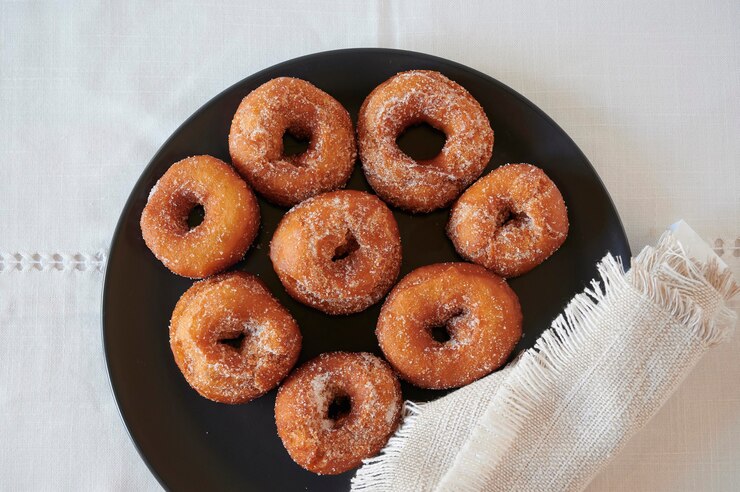
If you love traditional doughnuts with a golden crust and a fluffy centre, this straightforward fried recipe is worth trying. The dough is made with yeast, which gives the doughnuts their characteristic light texture. After frying, they are coated in cinnamon sugar while still slightly warm, allowing the sweet coating to cling to the surface.
Preparation time: 20 minutes
Rising time: 60 to 90 minutes
Cooking time: 15 to 20 minutes per batch
Makes: 10 to 12 doughnuts
Ingredients
For the Dough
- 500 g cake flour or bread flour
- 7 g instant yeast
- 60 g caster sugar
- 5 ml salt
- 250 ml lukewarm milk
- 1 large egg
- 60 g butter, softened
- 5 ml vanilla extract
- Vegetable oil, for deep-frying
For the Cinnamon Sugar Coating
- 100 g caster sugar
- 5 ml ground cinnamon
Method
- Place the flour, instant yeast, caster sugar and salt in a large mixing bowl. Stir to distribute the ingredients evenly.
- Add the lukewarm milk, egg and vanilla extract. Mix until a rough dough forms.
- Add the softened butter and knead the dough for about 8 to 10 minutes by hand, or 5 to 7 minutes in a stand mixer, until smooth and elastic. Add a small amount of flour only if the dough is excessively sticky.
- Transfer the dough to a lightly greased bowl. Cover with a clean tea towel or reusable cover and leave in a warm place for about 60 to 90 minutes, or until doubled in size.
- Turn the risen dough onto a lightly floured surface and roll it out to approximately 1.5 cm thick.
- Cut out doughnut rings using a doughnut cutter or a large round cutter with a smaller cutter for the centre. Gather the scraps, gently reroll them and cut additional doughnuts.
- Arrange the doughnuts on a lightly floured tray, leaving space between them. Cover loosely and leave to rise for another 20 to 30 minutes, until slightly puffy.
- Combine the caster sugar and cinnamon in a shallow bowl and set aside.
- Pour vegetable oil into a heavy-based pot to a depth of about 5 to 7 cm, ensuring the pot is no more than half full. Heat the oil to 170 to 175°C, checking with a cooking thermometer.
- Carefully lower two or three doughnuts into the oil, depending on the size of your pot. Avoid overcrowding, which can lower the oil temperature.
- Fry for approximately 1 to 2 minutes on each side, turning once, until golden brown and cooked through. Adjust the heat as needed to maintain the oil temperature.
- Remove the doughnuts with a slotted spoon and place them on a wire rack or a tray lined with paper towel.
- Allow excess oil to drain briefly, then toss the doughnuts in the cinnamon sugar while they are still warm.
- Continue frying the remaining doughnuts in batches, allowing the oil to return to the correct temperature between batches.
- Let the doughnuts cool slightly before serving.
Tips for Perfect Fried Doughnuts
Keep the oil temperature steady. A thermometer makes a significant difference. Oil that is too cool can produce greasy doughnuts, while oil that is too hot can brown the outside before the centre is cooked.
Give the dough enough time to rise. The first rise develops the dough, while the second rise helps create a light interior. Doughnuts that have not risen sufficiently can turn out heavy and dense.
Avoid adding too much flour. The dough should be soft and slightly tacky rather than stiff. Excess flour can make the finished doughnuts dry.
Do not overcrowd the pot. Frying too many doughnuts at once lowers the oil temperature and can lead to uneven cooking.
Drain safely. Use a slotted spoon to remove the doughnuts and keep your hands away from splashing oil. Never leave hot oil unattended, and keep water away from the pot.
Delicious Fried Doughnut Toppings
Cinnamon sugar is a classic choice, but these doughnuts are equally good with other coatings and fillings.
- Vanilla glaze: Mix icing sugar with a little milk and vanilla, then dip the cooled doughnuts into the glaze.
- Chocolate icing: Melt dark chocolate with a small amount of butter and dip the tops of the doughnuts into it.
- Jam filling: Pipe smooth strawberry or apricot jam into the centre of each cooled doughnut using a piping bag fitted with a small nozzle.
- Caramel: Drizzle cooled doughnuts with caramel sauce and finish with a tiny pinch of flaky salt.
- Simple icing sugar: Dust lightly with sifted icing sugar for a less elaborate finish.
Common Mistakes to Avoid When Making Homemade Doughnuts
Even simple doughnut recipes can go wrong if the batter, dough or cooking temperature is not handled correctly. Fortunately, most problems are easy to prevent once you understand what causes them.
Dense or Dry Baked Doughnuts
Overmixing the batter can develop too much gluten, making the doughnuts tough. Baking them for too long can also dry them out. Mix only until the ingredients are combined and start checking for doneness at the lower end of the recommended baking time.
Greasy Fried Doughnuts
Greasy doughnuts often indicate that the oil temperature is too low. When the oil is not hot enough, the doughnuts spend longer cooking and can absorb more oil. Keep the temperature between 170 and 175°C and fry in small batches.
Raw Centres
Doughnuts that brown too quickly may still be undercooked inside. Lower the heat slightly and check the oil temperature before continuing. For baked doughnuts, use the recipe’s recommended temperature and test the centre with a skewer.
Flat or Heavy Doughnuts
Yeast doughnuts may become dense if the yeast is inactive, the dough has not risen enough or too much flour has been added. Check the yeast’s expiry date, use lukewarm rather than hot milk and allow sufficient rising time.
Uneven Shapes
For baked doughnuts, pipe the batter evenly into the moulds. For fried doughnuts, roll the dough to a consistent thickness and cut the shapes cleanly. This helps each doughnut cook at a similar rate.
How to Store Homemade Doughnuts
Homemade doughnuts taste best on the day they are prepared, when their texture is at its freshest. Baked doughnuts can be stored in an airtight container at room temperature for about two days, provided they are not topped with a perishable filling or icing. Fried doughnuts are also best eaten fresh, but plain or sugar-coated versions can usually be kept in an airtight container for one to two days.
Avoid sealing warm doughnuts in a container, as trapped steam can make them soggy. Allow them to cool first, and store glazed doughnuts in a single layer where possible to protect their toppings.
If you want to prepare ahead, the fried dough can be made in advance and refrigerated after the first rise, provided it is covered well. Bring it back towards room temperature before shaping and completing the second rise. You can also freeze plain baked doughnuts once fully cooled, then thaw and warm them gently before adding fresh toppings.
Freezing fried doughnuts is possible, although their original crisp exterior may soften after thawing. Warm them briefly in the oven to improve the texture, then add fresh sugar or glaze as needed.
Baked and fried doughnuts each offer a delicious way to enjoy a homemade sweet treat, but they differ in texture, flavour and preparation. Baked doughnuts are convenient, easy to customise and often softer and more cake-like, making them ideal for quick batches and everyday baking. Fried doughnuts provide the golden exterior, fluffy centre and distinctive flavour that many people associate with traditional bakery favourites. With the simple recipes in this guide, you can explore both methods using accessible ingredients and straightforward techniques. Paying attention to mixing, rising times and cooking temperatures will help you achieve better results, whether you use an oven or a pot of hot oil. From cinnamon sugar and vanilla glaze to chocolate icing and fruity fillings, the finishing touches let you tailor each batch to your preferences. Ultimately, the best homemade doughnut is the one that suits your taste, fits the occasion and brings the pleasure of freshly made treats into your kitchen.