A mortar and pestle is one of the oldest kitchen tools, yet it remains essential for chefs and home cooks alike. Its simple design—consisting of a bowl (mortar) and a club-shaped tool (pestle)—allows for grinding, crushing, and blending ingredients in ways that preserve flavor and aroma. Using a mortar and pestle properly can elevate your cooking, from freshly ground spices to vibrant pastes and marinades. This guide explains techniques, tips, and creative uses to help you use a mortar and pestle like a professional chef.
Choosing the Right Mortar and Pestle
- Material Matters: Granite and marble provide weight and texture, ideal for grinding spices and making pastes. Ceramic is suitable for softer ingredients. Wood is lightweight but can absorb flavors and oils.
- Size: A medium-sized mortar (about 12–15 cm in diameter) is versatile for most kitchen tasks. Larger mortars are better for bulk ingredients.
- Texture: A slightly rough interior helps grip ingredients, making grinding more effective.
Techniques for Grinding and Crushing
- Crushing Herbs: Place fresh herbs in the mortar and use a gentle twisting motion with the pestle. This releases essential oils and enhances aroma without bruising the leaves excessively.
- Grinding Spices: Add whole spices like peppercorns, coriander, or cumin. Use firm, circular motions to crush them to the desired coarseness. For finer powder, use repeated pounding and grinding motions.
- Making Pastes: For garlic, ginger, or chili pastes, crush small amounts at a time. Use a rocking motion to grind ingredients into a smooth paste. Add a pinch of salt to help break down fibers and release flavor.
- Emulsifying Sauces: Ingredients like garlic, mustard, and oil can be combined directly in the mortar. Grind and mix with the pestle to create flavorful emulsions for dressings or marinades.
Creative Uses in the Kitchen
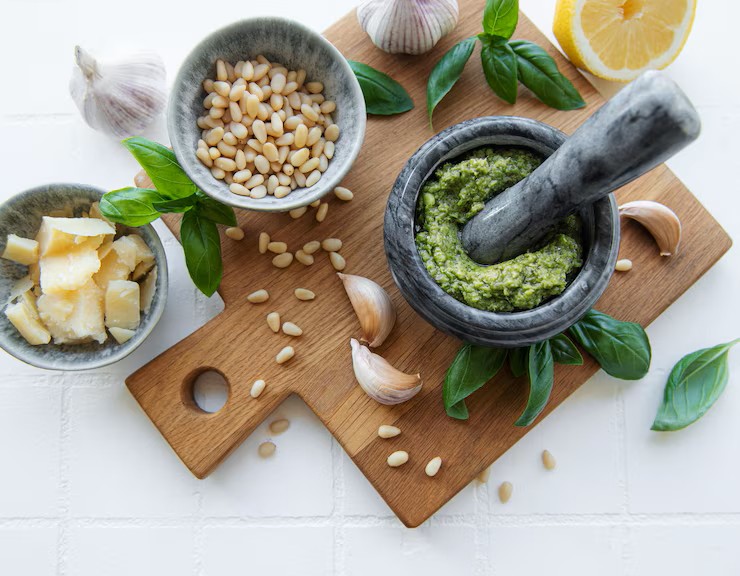
- Pesto and Herb Sauces: Crush fresh basil, pine nuts, garlic, and olive oil for a traditional, aromatic pesto.
- Guacamole: Mash avocado with onion, lime, and spices for a creamier, more flavorful result than a blender.
- Spice Blends: Grind whole spices to make fresh curry powders, rubs, or seasoning mixes.
- Cocktails: Crush fresh herbs, citrus, or berries to enhance cocktails with vibrant flavors.
Tips for Success
- Use small batches for better control and even grinding.
- Apply steady pressure and slow, circular motions instead of fast pounding.
- Clean immediately after use with warm water and a brush; avoid soap on porous materials like granite or wood.
- Dry thoroughly before storing to prevent cracks, odors, or mold.
- Practice patience—achieving fine textures takes time, but flavor payoff is significant.
Using a mortar and pestle like a chef is about technique, patience, and understanding the tool’s potential. From freshly ground spices to aromatic pastes and emulsified sauces, this simple kitchen tool can elevate your cooking and enhance flavors in ways that blenders and food processors cannot. By selecting the right mortar and pestle, practicing proper grinding and crushing techniques, and experimenting with herbs, spices, and pastes, you can create dishes that are more vibrant, aromatic, and authentically flavorful. Mastering this ancient kitchen method allows home cooks to enjoy the tactile satisfaction and enhanced taste that professional chefs achieve in their kitchens.